Gold Futures Rise About 4%, Heading for Best Week in Seven Weeks
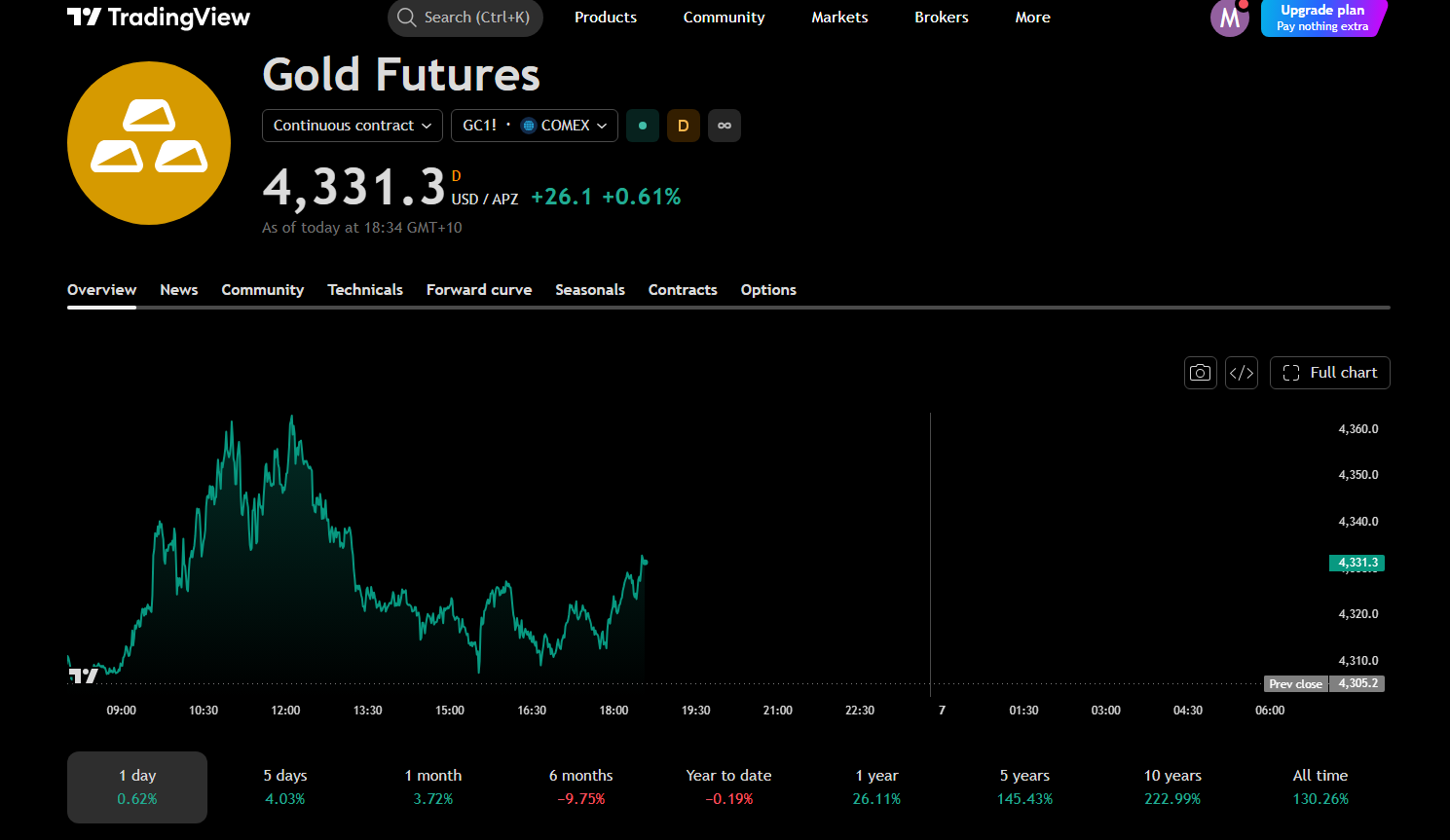
Gold futures have climbed roughly 4% over the latest five-session period, putting the precious metal on course for its strongest weekly performance in about seven weeks.
The continuous gold-futures benchmark traded around US$4,320–US$4,330 during the August 6 session. TradingView’s continuous-contract chart showed a five-day gain of 4.03%, while Barchart’s December 2026 contract performance data showed a gain of about 3.8% from July 30. Small differences are normal because futures platforms may display different contract months, rollover methods and intraday update times.
A sharp rebound from the week’s low
The advance has been fast. Barchart data placed the December contract’s five-day low near US$4,074 on August 3 and its high near US$4,364 on August 6. That represents a recovery of almost US$290 from the week’s low to high and returns gold to an important area above US$4,300.
The move is notable because it follows a difficult medium-term stretch. Although the contract has gained close to 4% in five sessions and remains more than 20% higher over 52 weeks, Barchart’s data still shows negative performance over the past three and six months. In other words, this week’s rally is strong, but one week alone does not confirm a lasting change in the broader trend.
What is supporting gold?
Gold is especially sensitive to expectations for interest rates, government-bond yields and the US dollar. Lower yields or a softer dollar can improve gold’s relative appeal because the metal does not pay interest. Expectations that monetary policy may become less restrictive can therefore attract buyers, while renewed expectations of higher rates can work in the opposite direction.
Recent labour-market data and changing interest-rate expectations have kept that debate active. Earlier in July, Reuters reported that weaker US employment data had reduced expectations for a rate increase, helping gold recover after four consecutive weekly declines.
Geopolitical uncertainty is another factor. Investors often turn to gold as a defensive asset when financial or political risks rise. However, safe-haven demand can change quickly, particularly when the US dollar and bond yields move sharply.
Key price areas traders are watching
The recent high around US$4,360–US$4,365 is the first area likely to attract attention. A sustained move above that zone would keep short-term momentum positive. The US$4,300 level is an important near-term reference point, while the US$4,070–US$4,100 area marks the region from which this week’s rebound began.
These are market reference levels rather than predictions. Gold futures can be volatile, and leverage can magnify both gains and losses.
What comes next?
Investors will now watch incoming US inflation and employment data, comments from Federal Reserve officials, movements in Treasury yields and the US dollar, and developments in major geopolitical hotspots. Those factors will help determine whether gold can hold this week’s gains or whether profit-taking emerges near the recent high.
For now, the headline is clear: gold has delivered its strongest short-term advance in roughly seven weeks and is attempting to rebuild momentum above US$4,300. The next test is whether buyers can keep the price above that level as the week closes.
All prices are in US dollars. This article is for general information and education only and does not constitute personal financial advice. Futures trading involves substantial risk and may not be suitable for all investors.